
ABC's of Starting A Business E-Book
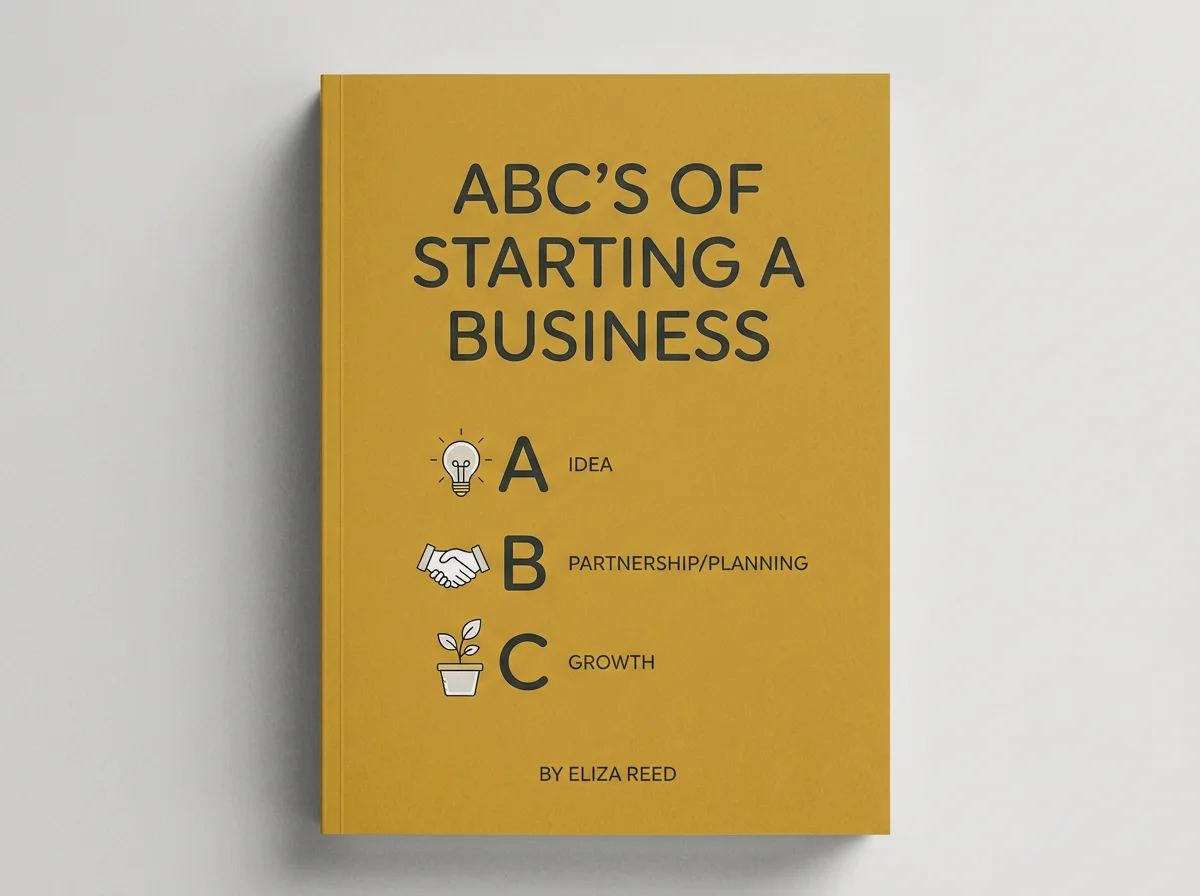
ABC's of Starting A Business E-Book
A — Assess your why
Define your purpose: what problem are you solving and for whom.
Identify passions and strengths that will sustain you through challenges.
Set short- and long-term goals tied to measurable outcomes.
B — Business idea validation
Research the market: target customers, competitors, trends, pricing.
Test demand with simple experiments: landing pages, surveys, pre-orders, prototypes.
Gather feedback and iterate before large investments.
C — Choose a legal structure
Compare sole proprietorship, LLC, S-corp, C-corp for liability and tax implications.
Register your business name and get necessary licenses/permits.
Obtain an Employer Identification Number (EIN) if needed.
D — Develop a business plan
Include mission, value proposition, target market, revenue model, and financial projections.
Create an operational plan outlining processes, suppliers, and key roles.
Use the plan to guide decisions and attract partners or lenders.
E — Establish branding
Define brand voice, visual identity, and customer experience.
Create a memorable name, logo, and consistent packaging or design.
Document brand guidelines for consistency across channels.
F — Finances and funding
Separate personal and business finances; open a business bank account.
Project startup costs, runway, and break-even point.
Explore funding options: bootstrapping, loans, grants, investors, crowdfunding.
G — Get insurance and protections
Obtain liability insurance, property insurance, and product liability coverage as relevant.
Protect intellectual property: trademarks, copyrights, patents where applicable.
Draft clear contracts for vendors, employees, and partners.
H — Hire carefully
Define roles and responsibilities before bringing on help.
Consider contractors or part-time help to start; scale hiring with revenue.
Invest in onboarding and clear expectations.
I — Infrastructure and systems
Set up accounting, invoicing, payroll, and inventory systems.
Choose tools for communication, project management, and CRM.
Automate repetitive tasks to save time and reduce errors.
J — Joint ventures and partnerships
Identify strategic partners who expand reach or capabilities.
Negotiate mutually beneficial terms and document agreements.
Monitor partnerships to ensure alignment with goals.
K — Keep compliance
Stay current with tax filings, employment laws, and industry regulations.
Maintain accurate records and consider a relationship with a qualified accountant.
Schedule regular compliance reviews.
L — Launch plan
Plan a phased launch: soft launch to test operations, then full launch.
Coordinate marketing, PR, and customer service for launch day.
Track metrics and be ready to pivot based on early results.
M — Marketing strategy
Define channels: social media, email, content, paid ads, partnerships, SEO.
Build an audience before launch with valuable content and lead magnets.
Measure ROI and double down on what works.
N — Nurture customers
Create excellent onboarding and customer service processes.
Collect and act on feedback to improve products and experience.
Build loyalty through rewards, education, and community.
O — Operations management
Standardize workflows, quality control, and supplier relationships.
Monitor inventory, lead times, and fulfillment performance.
Implement contingency plans for disruptions.
P — Pricing and profitability
Price for margin, not just cost or competition; factor in overhead and growth.
Test pricing strategies: bundles, tiered options, subscriptions.
Monitor unit economics and adjust to maintain profitability.
Q — Quality assurance
Establish standards and testing for products or services.
Document procedures and train staff to maintain consistency